
DPP - EU Digital Product Passport
What is a Digital Product Passport?
The European Digital Product Passport (DPP) is an EU regulation to help drive transformational change required in how product categories are designed and manufactured, as part of the wider circular economy action plan. It aims to:
At its core, the DPP solution creates a digital record, a product ID, that follows a product throughout its entire product's lifecycle, capturing product data from raw material sourcing and production methods right through to repair, resale, and recycling.
Who is affected by DPP?
The EU DPP will impact global value chains as all products placed on the European Union market will be affected.

When will DPP happen?
There will be a staged rollout across product categories between 2023-2030, however initial focus includes textiles.

The purpose is to digitally collect and record product data, from raw materials sourcing and production methods through to repair and recycling, across the value chain of a product and during its total lifecycle. This includes environmental impacts: energy use, carbon footprint, chemical content, and end-of-life recyclability.
Packaging and labels play a crucial role as the carrier of this information and a key part of how the consumer can access information about a product pre and post sale.
What do I need to stay compliant?
A data carrier
This is a fancy way of saying, essentially, a label. Something that stays with the garment for its product's lifecycle that provides a link to your DPP data and the data requirements set out under the Ecodesign for Sustainability Products Regulation (ESPR).
A digital platform
This is where the information will be held and displayed to your customer. It needs to be always available, with accurate product data listed for the garment's entire lifecycle, meeting both current EU regulations and the evolving data requirements of the ESPR.

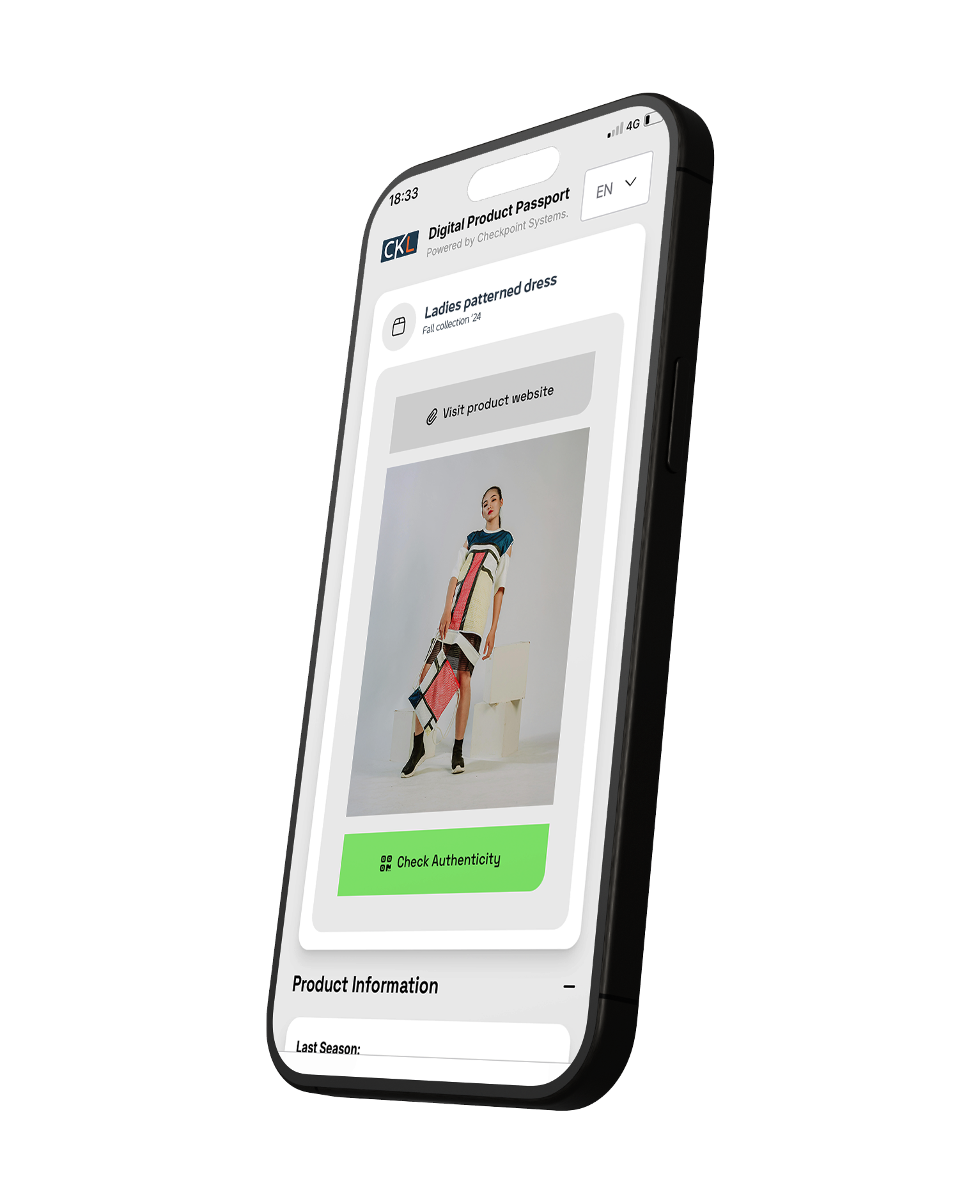
Understanding DPP label requirements
Using QR codes
QR codes may not be new, but they are experiencing a comeback right now, thanks to their ease of use for end consumers to access information about a product.
The beauty of QR codes is that they act as a way of linking to whatever product data you provide at setup - from environmental impacts and materials sourcing to style guides and outfit inspiration.
With the right software or web experience behind the code, you can easily transport customers to DPP data, certifications, and sustainability credentials tied to that specific product ID.
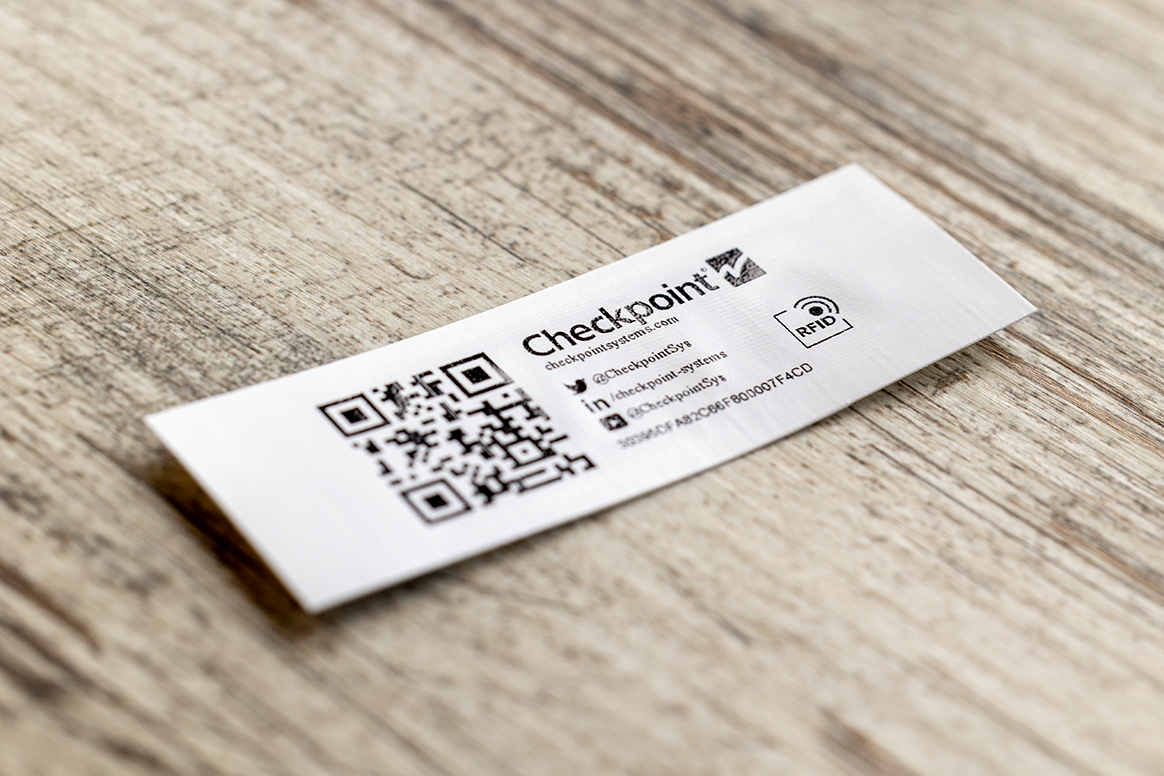

In-garment solutions
If considering the use of QR codes to facilitate your European Digital Product Passport (DPP) obligations, you need to consider that the link to your information must be attached to the garment itself, not just on a label or hang tag.
As the market leader in data integrity, Checkpoint Systems has solutions for automation of printing and weaving QR codes into the various label options you might need for your projects.

Things to consider with DPP
QR codes are just a way of letting your customers reach information; this information still needs to be housed somewhere, such as a bespoke DPP solution platform or secure web location. The same applies to NFC.
With vast experience in automating data flows and in integrating with lots of different third-party SaaS providers, Checkpoint Systems can help provide your labelling requirements, linking to wherever you need it to go.
Our tools and knowledgeable teams are here to help make your lives easier throughout these projects.
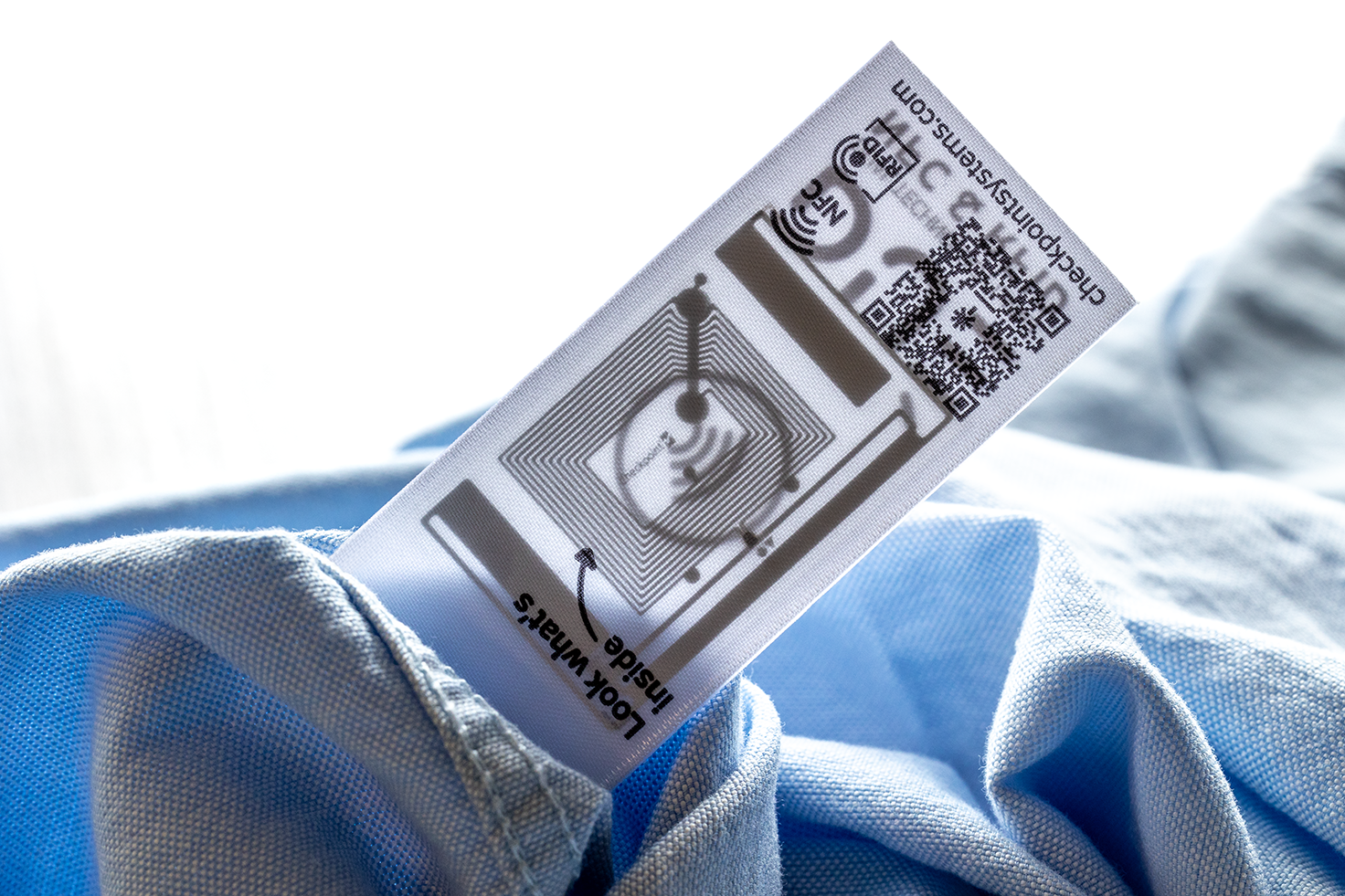
QR codes can be easily added to a wide range of labels for flexibility over placement

NFC technology can also quick get your customers to where they need to go with the tap of their smartphone

Provide an easily accessible link to certifications, environmental impacts and garment details

Link to other materials too, such as style guides, outfit inspiration and other branded collateral
Have any questions?
Talk to the team today about how we can help you prepare for this legislation.