
For decades, RF (Radio Frequency) has been the cornerstone of Electronic Article Surveillance (EAS) systems in retail. But what is RF? It is a technology that uses radio waves to detect security tags attached to merchandise. When a tagged item passes through antennas at the store’s exit, the system identifies the signal and triggers an alarm if the tag has not been deactivated.
Its simplicity, reliability, and proven effectiveness made it the global standard for preventing theft. But today’s retail environment has evolved. Theft is more frequent, more organized, and more complex, pushing retailers to seek more than just an alarm at the door. They now want to know what was stolen, when it happened, where it occurred, and how much it was worth. This is where RFID technology (Radio Frequency Identification) comes in.
Understanding RF and RFID: Core Differences and Similarities
Although RF vs RFID is a common way of framing the discussion, the two are not truly in conflict. Instead, they complement each other while serving different purposes:
- RF (Radio Frequency): The foundation of traditional EAS systems. It detects tagged items when they pass through antennas at the store’s exit, triggering an alarm if the item has not been deactivated.
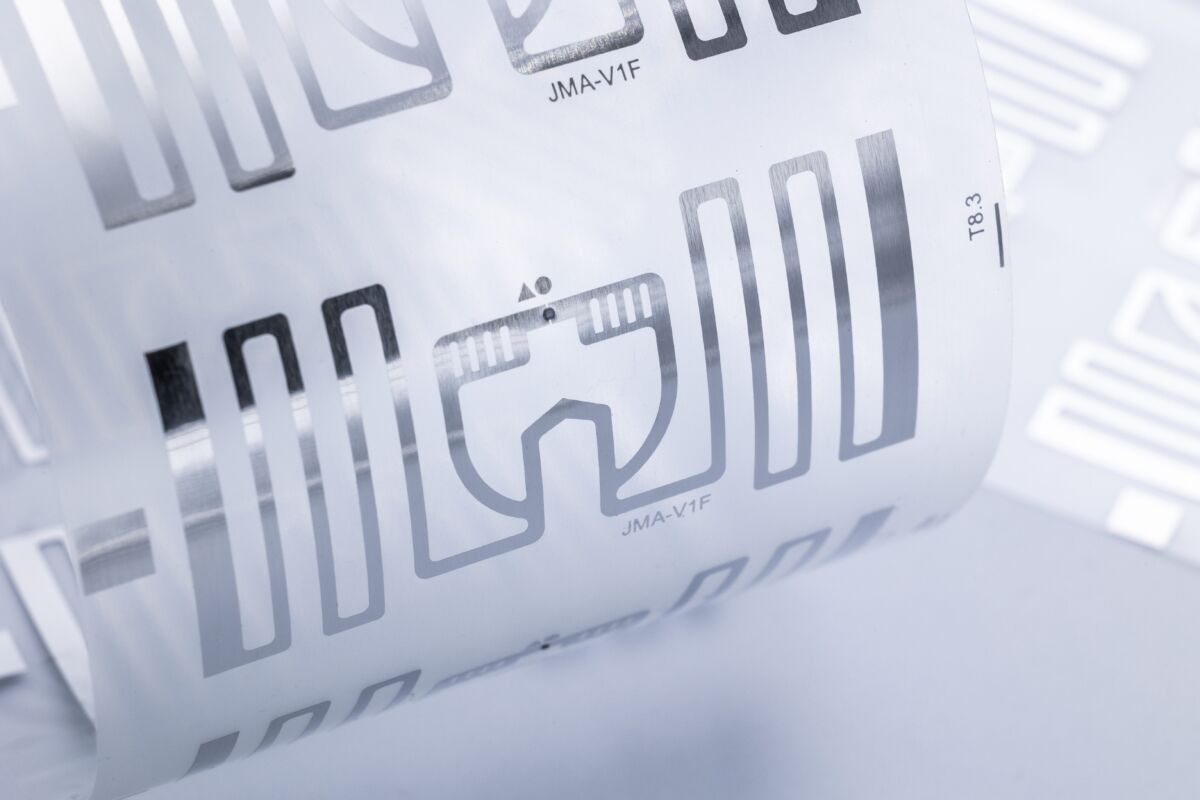
- RFID (Radio Frequency Identification): An evolution of RF that not only detects an item but also uniquely identifies it using a digital code stored in the tag. This enables item-level tracking and data collection that RF alone cannot provide.

Clothes in the store with EAS anti-theft tags
While RF simply alerts retailers that an item left the store without authorization, RFID reveals exactly what the item was, when it left, and under what conditions. This level of detail turns loss prevention into a far more strategic and proactive process.
How RFID Enhances RF Capabilities Without Replacing It
It’s important to clarify that this is not a matter of RF vs. RFID. RFID does not replace RF, it complements and strengthens it. RFID builds on the trusted foundation of traditional EAS, adding a new layer of visibility, accuracy, and actionable insights that RF alone cannot provide.
Because of this, retailers don’t need to choose one technology over the other. Depending on product type, price point, and theft risk, some items may remain protected with RF only, while others benefit from a combined RF/RFID approach. This hybrid model demonstrates how both technologies can coexist naturally within the same loss-prevention strategy.
Traditional RF systems are highly effective at detecting theft attempts, but they lack item-level detail. RFID fills this gap by delivering true Shrink Visibility, offering real-time information such as which item was stolen, its SKU, value, time of incident, and store zone. With this knowledge, retailers can reduce shrink more effectively, identify behavioral patterns, adjust operations, and anticipate future risks.
As RFID tags and infrastructure become increasingly affordable and simple to integrate, the technology is no longer limited to premium products or luxury brands. RFID is now a scalable solution that benefits all retail sectors—from grocery to fashion—enhancing security while improving operational efficiency.
Retail Use Cases: When and Why to Upgrade Your EAS System
Retailers are increasingly facing organized retail crime, shrinking profit margins, and rising customer expectations. In this environment, upgrading EAS systems with RFID delivers measurable benefits:
- Enhanced Loss Prevention: RFID provides item-level data that allows stores not only to detect theft but to understand it, like what was stolen, when, and where.
- Customer Experience: RFID ensures smoother, interruption-free shopping experiences.
- Operational Insights: RFID enables stores to analyze theft patterns by product, time of day, or store area, helping retailers implement proactive measures.
- Scalability: With versatile tags and modular systems, retailers can gradually adopt RFID, starting with high-risk product categories or pilot stores, and then expanding across their networks.
In short, RFID makes loss prevention smarter, more precise, and more aligned with the operational realities of today’s retail.
The Next Step in Retail Security
RFID represents the next step in retail security. It doesn’t just detect theft, it enables retailers to understand, anticipate, and prevent it. By complementing and enhancing RF, RFID redefines shrink control, delivering greater visibility, stronger protection, and smarter decision-making.
In today’s challenging retail landscape, RFID is not the future, it is the present. The shift is already underway, and those who embrace it now will be better positioned to protect their assets, improve customer experience, and safeguard profitability.