RFID labels - How to handle and store

Best practices

In order to get the best performance possible from your RFID inlays and labels, we have put together the following guidelines and advice.

Failure to do so will result in permanent damage.

Weight icon

Do not store under a heavy load

keep dry icon

Keep in a dry place

don't expose to heat icon

Do not expose to heat

General recommendations

1. Tags are electronic devices with sensitive RF properties and can break if not handled with care.

2. Make sure that the application of tags follows the correct procedures to ensure highest performance and quality.

3. Metallic or conductive materials are not suitable for RFID labels as they may weaken RF performance. (Except for specific RFID metal labels)

4. Handling of RFID products shall be performed by trained personnel only. In case of doubt, please consult Checkpoint Systems.
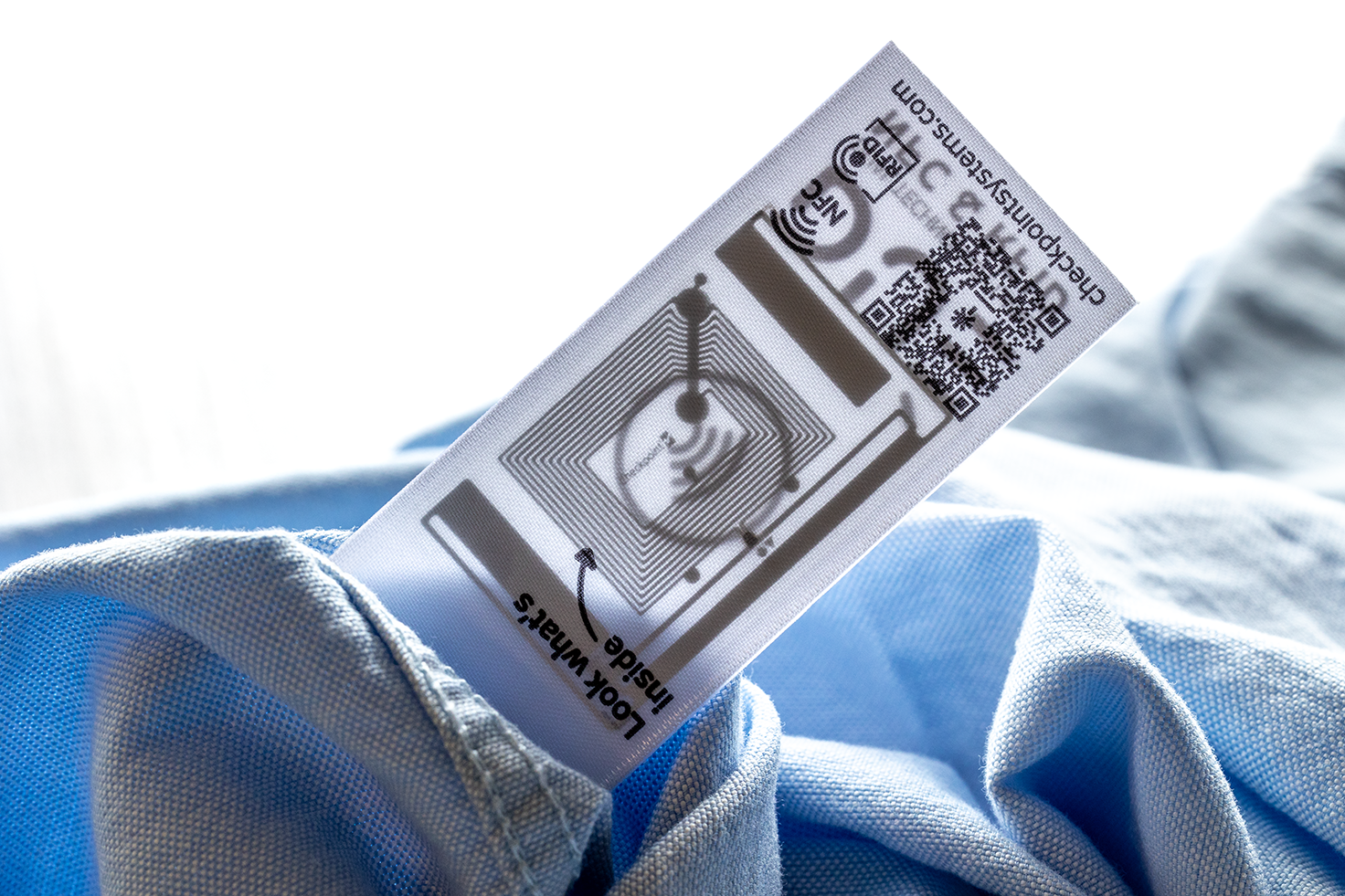

nfc and rfid label
no static electric icon

No static electricity

no puncturing icon

No
puncturing

no tearing icon

No
tearing

no folding icon

No
folding

no cutting icon

No
cutting

no buttons icon

No
buttons

no stapling icon

No
stapling

no liquids icon

No
liquids

no washing or stone washing icon

No washing or stone washing

direct ironing icon

Direct ironing - Max 2 seconds

direct steaming icon

Direct steaming - Max 2 seconds

no spinning icon

No spinning or tumble drying

no dry cleaning

No
dry cleaning

no wringing icon

No
wringing

no bleaching icon

No
bleaching

no application on metal icon

No application on metal*

no metal foil application icon

No metal foil application

no glue icon

No
glue**

*Unless a specific RFID on-metal label, please consult Checkpoint Systems if unsure

**Other than the glue already applied to your chosen RFID form factor (ie, sticker)

Further guidance

In order to avoid IC damage due to static electricity or climatic conditions (temperature and humidity), the following changes can be made to working environment:

• Coat the floor with an antistatic layer, at least on the working platforms.

• Check the air humidity (40-60% RH) and temperature. (20 to 24°C)

• If there is not air conditioning in the production facility, isolate the RFID department and install up-to date air conditioning in that area.

• All employees should wear ESD (electrostatic discharge) clothing and shoes.

• Every time someone touches a roll of inlays, he or she should be grounded.

Handling before or during converting/printing:

• Do not open the inlay roll package unnecessarily.

• Open the package only in the RFID facility.

• Do not touch the IC side of the inlay if you are not connected to the ground.

• Try to use the whole roll in one pass.

• If using the whole roll is not possible, put the roll back into the original package, seal it and take it back to storage.

• Do not damage or drop the roll.

• Always keep inlay reels on their side.

• Do not lay rolls on top of inlays.

• Inspect traceability label on the roll and yield prior to converting.

• Review inlay specification for delivery format.

• Handle the product with care.

• Finish and pack the product directly after inserting.

• When stored, hang the reel from the core or place it on a pallet with a soft underlay.

• Do not wind reels too tight.

• Always keep inlay reels on their side.

• Do not stack pallets or too many RFID products on top of each other.

• Do not roll mother rolls or ready coils on the floor, carry them or use a trolley.

• Keep the working environment tidy and clean.

• Use a strong package that protects the product well against the moisture.

• Lock rolls with a center shaft or chucks to prevent them from gliding in the box during transport.

• Packaging material must not create static electricity load when handled.